







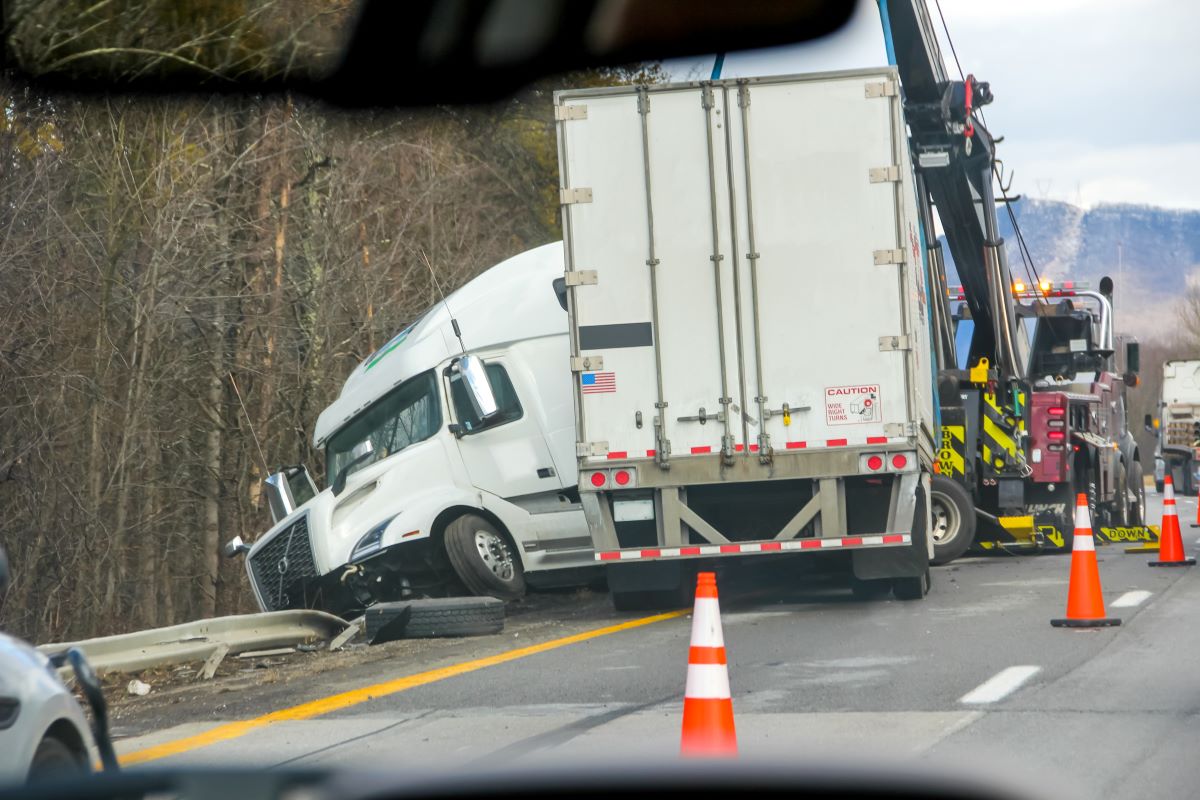
1. Move Out of Traffic (If It’s Safe)
If your vehicle is driveable and you aren’t seriously injured, pull to a safe location away from traffic, such as the shoulder of the road. Turn on your flashers and use hazard markers so you stay visible and prevent secondary crashes.
However, there are certain situations when you should not move your vehicle. Stay in place if:
- Your car cannot safely be driven.
- Moving the vehicle could worsen injuries.
- There is a fatality that requires a formal investigation.
- There are fuel or fluid leaks that could create a fire hazard.
- Law enforcement instructs you to remain at the scene.
2. Call 911
If you were injured in a truck accident or suspect there’s more than $1,000 in property damage, the accident must be reported immediately. Depending on the location and severity of the commercial vehicle accident, emergency dispatch will send first responders based on their jurisdiction. This may include:
- Michigan State Police: For accidents on major highways like I-96, U.S. Route 131, or M-6.
- Local Police: For motor vehicle accidents occurring within city or village limits, such as downtown Grand Rapids.
- County Sheriff: If the accident occurred in an unincorporated community.
- Fire/EMS: For injuries, airbag deployment, entrapment, or other complicating factors.
Law enforcement will typically determine whether a tow truck is required and may call one directly. In some cases, drivers may contact a towing service themselves or by calling roadside assistance.
3. Notify Police and Ensure an Accident Report Is Filed
Under MCL 257.622, an official Traffic Crash Report must be filed immediately using Form UD-10 if the accident meets any of these three criteria:
- Injury or death, including minor injuries
- Property damage of $1,000 or more
- Damage to property or an unattended vehicle
Police officers usually prepare an official crash report documenting the accident scene, the vehicles involved, and statements from drivers and witnesses. The official accident report is used by insurance companies, courts, and the state to record the facts of an accident. This document can become critical evidence in your truck accident claim.
Note: If an officer doesn’t respond to the accident scene, you may need to visit the nearest police station to file a Traffic Crash Report.
4. Exchange Information With Other Drivers
As with any other motor vehicle accident, be prepared to exchange information with the truck driver and any other motorists who were involved in the crash. Truck drivers are typically trained on commercial vehicle accident procedures to help streamline the process. Information you may need includes:
Driver Information
- Full name
- Home address
- Phone number
- Driver’s license number
Insurance Information
- Insurance company
- Policy number
- Claims contact number
Commercial Vehicle Details
- USDOT number, typically displayed on the cab door
- Trucking company name (e.g., Martin Transportation Systems, XPO, Holland)
- Trailer license plate number
- Cab or vehicle ID number
- Shipping company that controls the cargo (if visible)
In Michigan, semi-trucks often carry three separate insurance policies: one for the cab, one for the trailer, and one for the cargo. If you only get the driver’s info, you might lose the ability to file a claim against the company that actually owns the trailer or loaded the cargo.
5. Collect Witness Information
Independent witnesses can play an important role in a commercial vehicle accident case. Motorists and bystanders may be able to provide dashcam footage or other information to help confirm how the crash occurred and the exact sequence of events. This can be especially important if liability is disputed. If possible, obtain:
- Witness names
- Phone numbers
- Email addresses
- A brief statement or voice memo
6. Take Photos of the Scene
Photographic evidence can help visualize the damage and reconstruct the cause of the commercial vehicle accident. If you are able, try to capture:
Damage
- Damage to all vehicles
- Damage to nearby property
- Closeups of the point of impact
- Photos of all four corners of the vehicle
- Airbags or interior damage
- Any leaking fluids
- Injuries at the time of the accident and afterwards
The Accident Scene
- Road conditions
- Debris
- Skid marks
- Traffic signals
- Weather
- Environmental factors
Location Details
- Street signs
- Mile markers
- Intersections
- Highway exits
Vehicle Identifiers
- License plates
- Insurance cards
- USDOT numbers
The more documentation you gather, the stronger your potential claim may be. If you are injured and unable to take photos, contact a Michigan truck accident lawyer as soon as possible. The law firm may be able to send an investigator to the accident scene to collect additional evidence.
Tips to Protect Your Truck Accident Case
After a crash involving a commercial vehicle, insurance companies often begin investigating immediately. Protect your rights by taking the following precautions:
1. Notify Your Insurance Company Promptly
Michigan’s no-fault system requires you to notify your insurer after a crash. This allows you to access personal injury protection (PIP) benefits for medical expenses and lost wages. This is required before seeking additional compensation from the trucking company.
2. Don’t Sign Insurance Documents Immediately
Insurance companies may request statements or offer quick settlements. Avoid signing anything until you fully understand your rights and are aware of the full extent of your injuries. Talk to an attorney first.
3. Do Not Admit Fault
Even a simple apology can be misinterpreted as accepting blame. Let investigators determine what happened. Do not give a recorded statement before consulting an attorney who can tell you what to do after a commercial truck accident.
4. Attend All Medical Follow-Ups
Follow your doctor’s instructions, and attend all medical or physical therapy appointments. Medical records can play a major role in documenting your injuries.
5. Avoid Posting on Social Media
Insurance adjusters and defense attorneys sometimes review social media accounts when evaluating claims. Avoid posting details or photos related to the accident or your injuries. Even a post that simply states you’re doing alright can hurt your case. Ask your attorney before deleting old posts to avoid tampering with potential evidence.
6. Speak With a Truck Accident Lawyer
Truck accident cases often involve federal trucking regulations, complex liability questions, and multiple insurance companies. An experienced attorney can explain what to do and help you determine what insurance coverage applies, what your damages may be worth, and whether your injuries give you the right to file a personal injury lawsuit or at-fault insurance claim.
What Information Is Needed to File a Truck Accident Claim?
To begin a truck accident claim, you may need the following information.
- Full license plate number for both vehicles
- Vehicle identification numbers (VINs)
- Vehicle make and model
- Date and time of the crash
- Exact accident location
- Name of the law enforcement agency that responded
- Photos showing the vehicles and accident scene
This information helps investigators identify responsible parties and obtain important records, such as truck driver logs, maintenance reports, and electronic evidence from black boxes and other devices.
What if the Truck Accident Involved a Government Vehicle?
Some truck accidents involve government-operated vehicles. Examples include:
- City garbage trucks
- Municipal or utility vehicles
- Public transit buses
- School buses
- Snowplows
- Road construction trucks
These claims may fall under the Federal Tort Claims Act (FTCA) or Michigan Governmental Tort Liability Act (GTLA), which establish special procedures and strict filing deadlines. These claims generally involve shorter time limits than other personal injury cases (as little as 60–120 days), and you may need to provide advance notice of your intent to sue. Speaking with an attorney early is especially important in these situations.
Get a Free Case Review
At Barrix Law Firm, we bring more than 30 years of experience helping injured clients in Grand Rapids and throughout West Michigan. We have recovered verdicts and settlements valued at over $1 million for our clients. Our team can tell you exactly what to do after a semi-truck or tractor-trailer accident.
Contact us today for a FREE, in-depth case review. Let our team protect your rights.