






Dog Bite Basics
Dog bites are more than just painful. They can cause infection, nerve damage, scars, and emotional trauma, including a lifelong fear of dogs. According to the American Veterinary Medical Association, 4.7 million people are bitten by dogs every year. About 800,000 of these victims, mostly children, require medical care, and about 20% of bites become infected.
Dog bites are a big problem for homeowners insurance companies. Many carriers have breed-specific policies that limit coverage for injuries caused by certain breeds, including pitbulls, rottweilers, German shepherds, and wolf hybrids. The Insurance Information Institute reports that about 70% of dog bites occur on private property. In fact, dog bites account for about 1 in 3 homeowners liability claims and about $1.5 billion in annual insurance payments. These claims can become complex very quickly, and liability disputes are common.
If you or a loved one has been bitten by a dog in Michigan, acting quickly and correctly protects your health and your legal rights. At Barrix Law Firm, we have over 30 years of experience helping clients who’ve been hurt by animal attacks. Below is a step‑by‑step guide covering what to do after a dog bites you in Grand Rapids, Grand Haven, or West Michigan.
1. Get to Safety
In the event of a dog bite or animal attack, your first priority is to remove yourself from danger. Put distance between yourself and the dog to prevent further injury. Here are a few tips to protect yourself and avoid escalating the situation.
- If you’re carrying anything, such as a jacket, handbag, or umbrella, use it to create a barrier between yourself and the dog.
- Stay calm. Avoid making eye contact with an aggressive animal. Tell the animal firmly, “No” or “Go home.”
- Move to higher ground by standing on a car, bench, or steps, if possible.
- If a dog has bitten you, avoid pulling away as this can worsen your injuries.
- Try to stay on your feet. If you fall, curl into a ball with your hands over your neck and ears.
- If possible, back away slowly while facing the animal. Avoid sudden movements that could escalate the attack.
- Call for help as soon as possible. If the dog remains aggressive or is on the loose, call 911. Otherwise, use the non-emergency dispatch number to contact law enforcement or animal control.
2. Seek Immediate Medical Attention
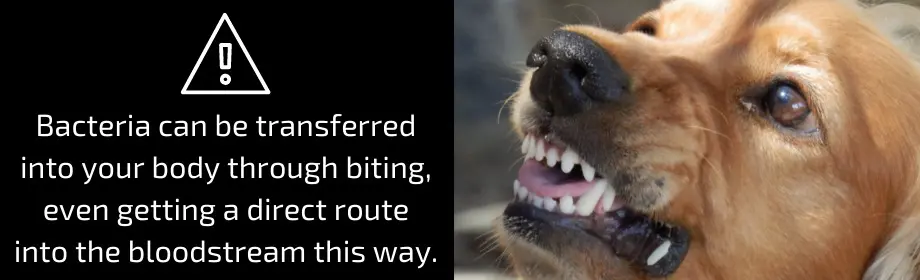
Even if the bite looks minor, see a health care provider right away. Dog bites can introduce bacteria deep into tissue and lead to infection or tetanus risk.
Do not delay treatment as infections can escalate quickly and lead to a variety of complications that can affect the healing process. Detailed medical records are needed to document the severity of your injuries and ensure that you’re properly reimbursed for your medical care and pain and suffering.
3. Report the Bite to Local Authorities
Reporting the bite creates an official record of the attack that helps support your legal claim. It’s also helpful for tracking public health risks, such as rabies. In Michigan, dog bites should be reported promptly (within 24–48 hours) to animal control and/or the local health department, even if the wound is minor. Dogs that bite must be quarantined for 10 days either at home or in the county animal shelter.
Grand Rapids area (Kent County):
- Kent County Animal Control
- Call 911 for emergencies or 616-632-7310 for community rabies monitoring.
- Contact your doctor or the health department to see if treatment is needed.
Grand Haven area (Ottawa County):
- Ottawa County Sheriff’s Office Animal Control
- Call 911 for emergencies or 800-249-0911 to report a dog bite.
- Contact your doctor or the health department to see if treatment is needed.
A formal dog bite report protects you and others. It helps aid rabies monitoring, quarantine decisions, and dog bite history documentation.
4. Identify the Dog and Owner, If Possible
If the dog owner is present and cooperative, gather the following information:
- The owner’s name, address, and phone number
- Proof of the dog’s rabies vaccination and license
- Their veterinarian’s contact information
- Details about the dog, including breed, age, and any history of aggression
This information is essential for medical and legal purposes. Rabies exposure requires immediate attention, and confirmation of vaccination status can guide your medical provider’s next steps.
Dealing With an Unknown or Uncooperative Owner
If the dog’s owner refuses to cooperate or if they leave the scene, report the incident to animal control. Provide as much detail as you can:
- The dog’s appearance (breed, color, size, markings)
- Where the dog was last seen
- Any witnesses who may know the dog or where it lives
Authorities can investigate the incident and identify the dog and owner. Filing a report also creates a formal record to support your injury claim. If you aren’t sure who owns the dog, Barrix Law Firm can work with authorities to help identify the owner and protect your rights.
5. Document the Incident
Detailed documentation can significantly strengthen your dog bite claim. Start by taking clear, detailed photos of the following:
- Your injuries from multiple angles and at different stages of healing
- The exact location of the incident, including any warning signs, fences, or lack of barriers
- Any torn or damaged clothing or personal property (do not throw these items away)
Next, write down a full account of everything you remember while the memories are still fresh:
- Date and time of the incident
- Exact location
- Breed, size, and color of the dog (if known)
- Whether the dog was leashed or roaming
- Owner’s name and address (if available)
- Sequence of events leading up to the bite
6. Collect Witness Information
If anyone saw the incident, get their name, phone number, and a brief statement, if possible. Witnesses play an important role in proving liability and corroborating your side of the story, especially if the dog owner disputes your version of events. Eyewitnesses can confirm key facts, such as:
- Whether the dog was on a leash
- If the dog appeared aggressive or out of control
- Whether the bite was unprovoked
- Where the incident occurred (public vs. private property)
Neutral third-party accounts carry weight with insurance adjusters and courts. If the bite occurred in a public place or near homes or businesses, ask nearby residents or employees if they saw anything or are aware of the dog’s history.
Keep witness information organized. Even a brief written statement that’s signed and dated can support your claim later. Your attorney can also help you reach out to witnesses that you have identified.
7. Avoid Talking to Insurance Adjusters Alone
After a dog bite, the dog owner’s homeowners or renters insurance may try to contact you. Claims adjusters are trained to resolve claims quickly and for as little money as possible. They may push you to make a recorded statement or accept a settlement before you understand the full extent of your injuries.
Insurance companies may try to shift blame, deny liability, or argue provocation to avoid paying full compensation, so it’s important to understand your rights and stand your ground. If the company is pressuring you, simply state that you wish to speak to your attorney first. To protect your rights:
- Do not provide a recorded statement.
- Do not sign any documents.
- Do not accept a settlement without legal advice.
An experienced attorney like Jason S. Barrix can explain what to do after a dog bites you. Lawyers have the resources needed to gather medical records, incident reports, and witness statements to support your claim. Our team can handle all communications and claims negotiations with the insurance company to protect your rights. We pursue full compensation for medical care, past and future lost income, pain and suffering, disfigurement, and long-term emotional trauma.
8. Know Your Legal Rights Under Michigan Law
Michigan’s dog bite law imposes strict liability on pet owners in many situations. This means you generally do not need to prove that the owner was negligent; you need only show that:
- The dog bit you,
- The bite occurred without provocation, and
- You were lawfully on public property or private property (even the owner’s) when bitten.
This rule is found in MCL 287.351 (Liability of Owner for Dog Bite). It states that if a dog bites a person without provocation in those settings, the owner “shall be liable for any damages suffered by the person bitten, regardless of the former viciousness of the dog or the owner’s knowledge of such viciousness.”
This means you don’t have to show that the animal had bitten someone before or that the owner should have known that the dog was dangerous. As long as the bite was unprovoked and you were where you had a legal right to be, the dog owner is typically responsible for your injuries.
The Statute of Limitations for Dog Bites
You should also be aware of how much time you have to file a dog bite lawsuit if your attorney is unable to reach a favorable settlement with the insurance company. Under Michigan law, you generally have 3 years to file a lawsuit for personal injuries, including dog bites. This deadline is known as the statute of limitations. If you miss it, your case will be dismissed by the court and you lose your right to compensation.
9. Contact a Michigan Dog Bite Attorney
Dog bite claims may seem straightforward, but insurance companies rarely treat them that way. A knowledgeable personal injury attorney protects your interests from the start and helps prevent costly mistakes. An experienced Grand Rapids dog bite injury lawyer can:
- Preserve and organize evidence, including photos, medical records, witness statements, and animal control reports
- Determine the full value of your case, including current and future medical care, lost wages, scarring, emotional trauma, and pain and suffering
- Handle all communication with insurance companies, so you don’t risk saying something that hurts your claim
- Ensure all deadlines and legal requirements are met, including notice rules and the statute of limitations
- Build a strong liability case under Michigan’s dog bite laws and push back against attempts to deny or reduce compensation
Get a Free Case Review
If you or a loved one has been bitten by a dog, contact Barrix Law Firm for a free, no‑obligation case review. We’ll evaluate the facts, assess your damages, and explain your rights under Michigan law. There’s absolutely no fee unless we win. Contact our offices in Grand Rapids or Grand Haven to get started.